Active socks should reduce friction and fatigue while keeping enough airflow for long sessions.
Cushioning should be targeted
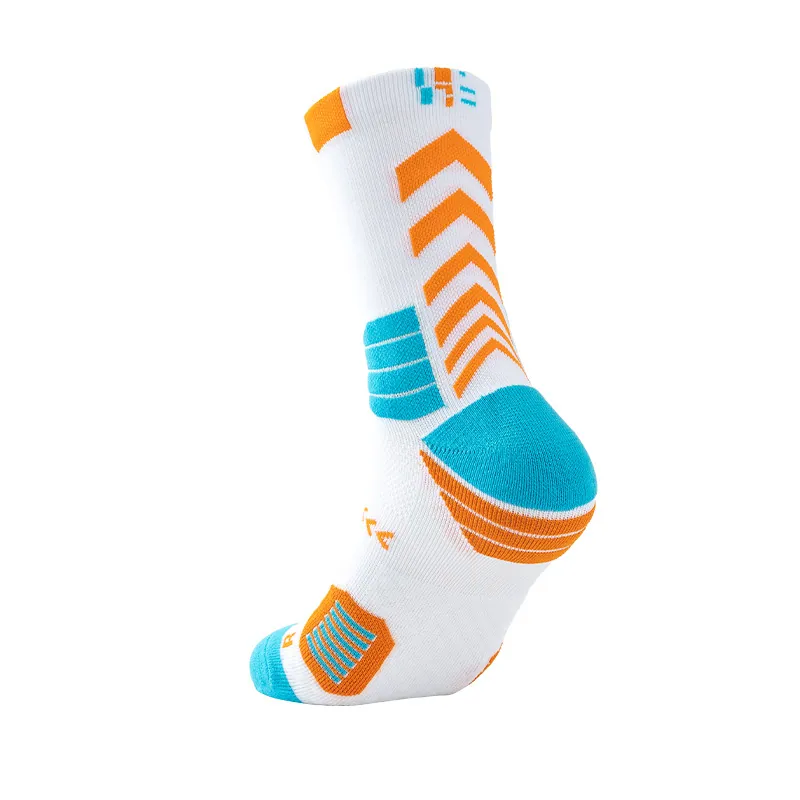
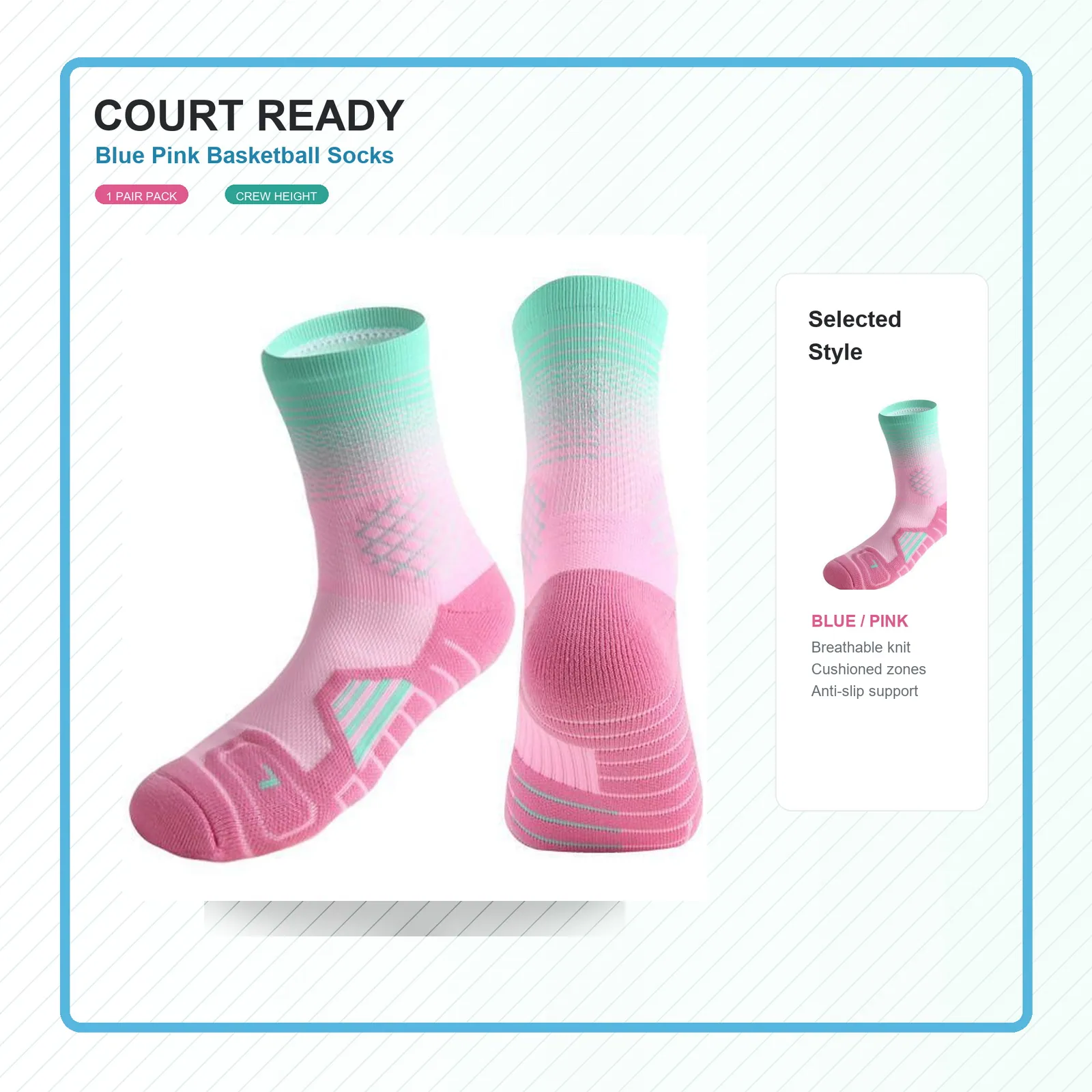
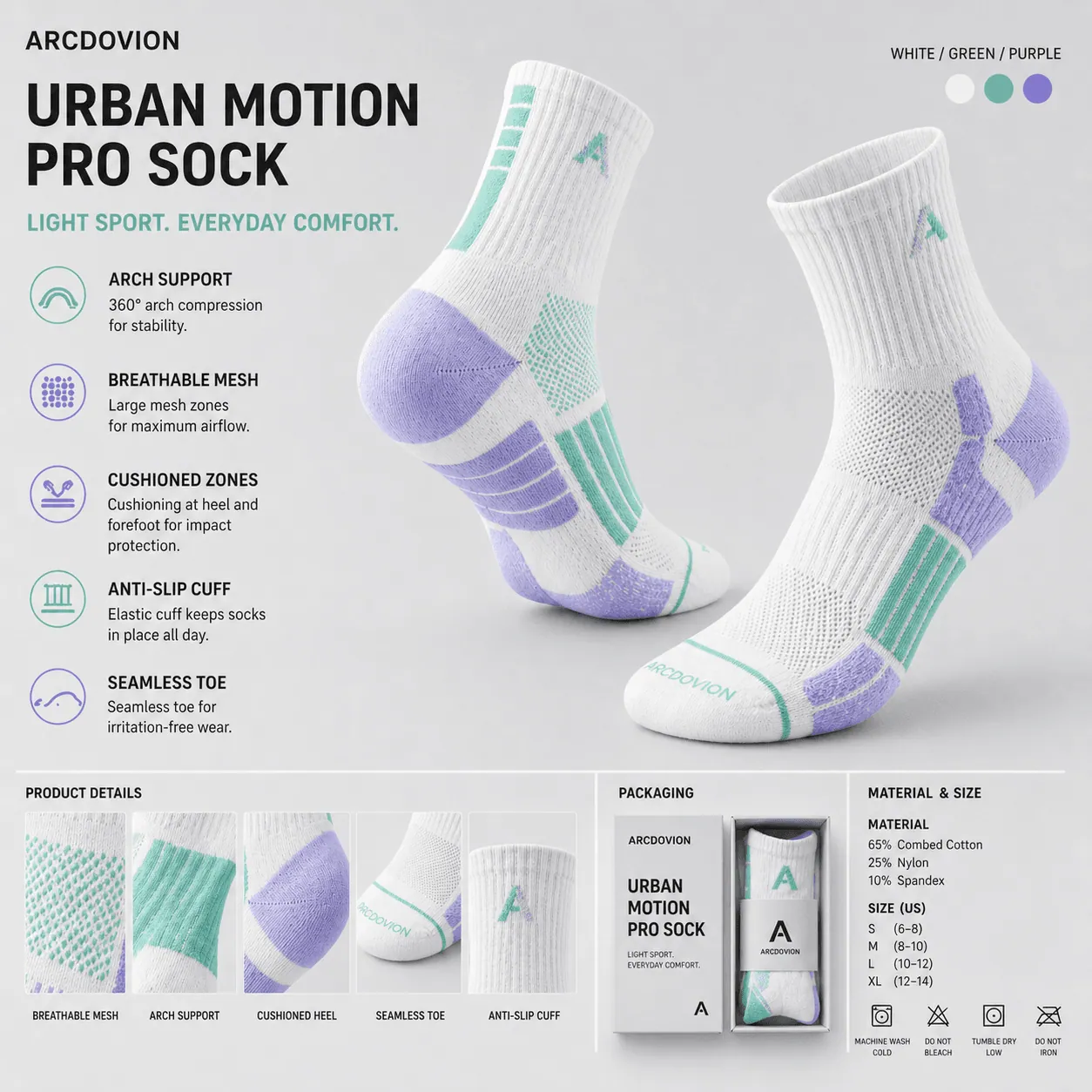
More padding is not always better. Active socks work best when cushioning sits under the impact zones while the upper area stays breathable and flexible.
- Heel and forefoot protection
- Breathable upper knit
- Enough stretch for natural movement
Think in sessions, not sports
A gym hour, a city walk, and a weekend trail can share the same sock requirements: dry-feel comfort, stable hold, and friction control. That is why a versatile active pair earns more wears.
Friction control matters more than thickness
Hot spots often start when the foot moves inside the shoe. A good active sock manages that movement with heel hold, a smoother toe area, and knit zones that keep the fabric from bunching.
- Secure heel pocket
- Smooth toe feel
- Knit that resists bunching
Fit should stay calm through movement
The right active sock is easy to forget once the session starts. If you keep pulling it up, twisting it back, or adjusting the toe, the structure is asking for too much attention.